Locations





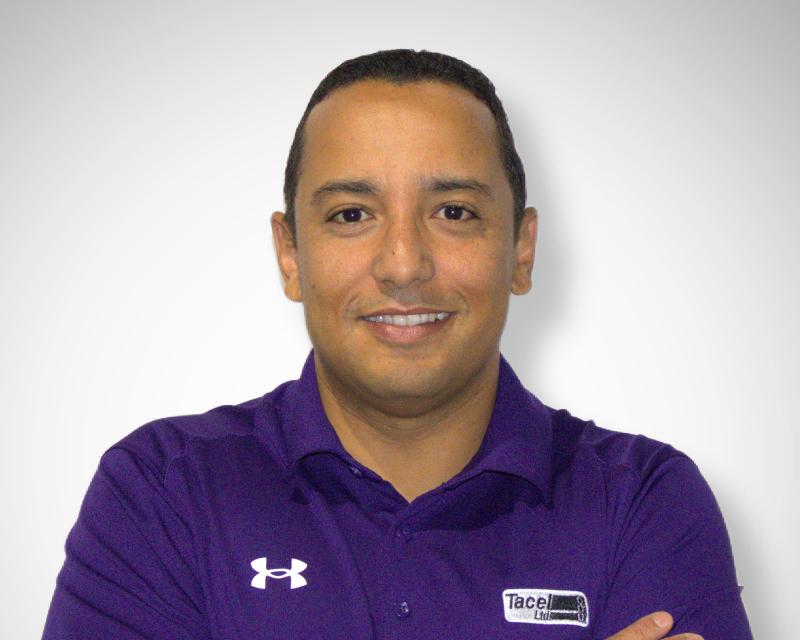
Navigating the streets in Montreal traffic can be challenging at the best of times but the city is installing new technology from Toronto-based Tacel at 100 intersections.
It has contracted with Ann Arbor, Mich.-based Derq and its Canadian partner, Tacel, to launch the program that will provide access to real-time traffic data.
“Montreal is shifting from retrospective, historical traffic analysis toward proactive, real-time safety monitoring," Yassine Benamghar, vice-president with Tacel said to TechNX in an email exchange. "The city wants to anticipate risks before they cause collisions, respond faster when emerging dangers appear, and target safety interventions where they’ll have the greatest impact for all road users: drivers, cyclists and pedestrians.”
“The deployment is part of the city’s SASMI (Safety and Mobility Analysis System at Intersections) program, and at 100 intersections it represents one of the largest AI-powered traffic safety deployments in North America.”
How AI fits in
AI is at the heart of the technology, explained Karl Jeanbart, co-founder and COO at Derq, who also spoke to TechNX through email.
So how does it work? “Computer vision lets existing traffic cameras identify and categorize different road users, including more nuanced distinctions such as cyclists versus pedestrians, and to do so across complex roadway conditions, including low-light and bad weather,” he said.
As well, it uses “behavioural analysis” to help “detect risky patterns, near-miss incidents, illegal turns, wrong-way driving, red-light running, and other safety events that might otherwise go unnoticed.”

It also provides interactive AI agents so that traffic staff members can ask questions like, where are the most near-misses during a given time period?
“For example, if a vehicle passes very close to a cyclist but no collision occurs, traditional crash reporting wouldn’t capture that event. Derq’s AI can flag it as a high-risk near-miss and help transportation teams understand the contributing factors, enabling them to take action before a serious crash occurs,” Jeanbart said.
“This gives municipalities a much more complete picture of how intersections are actually functioning day-to-day.”
Other communities have installed the system, according to Jeanbart.
“Derq’s technology is already field-tested and deployed across North America in communities including Detroit, Seattle, Houston, Fremont, Sarasota, and Bellevue, as well as with state transportation agencies. Transportation teams are responding to the ability to see leading indicators of risk, not just historical crash data, and to use that information to support Vision Zero, traffic operations and roadway safety planning,” he said.
Will tap into "existing infrastructure"
Montreal is deploying the system, known as INSIGHT at a cost of $1.9 million. INSIGHT “connects directly to cameras and sensors already installed at Montreal intersections, so there was no need to rip out and replace existing infrastructure, which is a significant advantage for a city with an established network,” Benamghar said.
The partnership was first announced in September 2025. The SASMI program was publicly announced on June 1, and approximately 30 intersections had been hooked up by that date.
Tacel is a Canadian-owned company that was founded in 1979. It provides a number of products for municipalities to manage traffic, such as pedestrian signals, advanced monitoring systems, signal controllers and traffic management software.
“The system feeds into CGMU’s (Centre de gestion de la mobilité urbaine) operations, and as Tacel’s role as the Canadian delivery and integration partner, we supported deployment to ensure the solution fits within the city’s existing traffic management environment,” Benamghar said.
The systems will be managed entirely in-house by CGMU, he added.
Because the system deploys real-time cameras, privacy is a concern. However, the implementation assures that these concerns are mitigated, according to Benamghar.
“This is a fair question, and one agencies ask us about regularly. The system leverages cameras and sensors Montreal already owned and operated; it doesn’t introduce a new surveillance layer, it adds an analytics layer to existing infrastructure.”
As well, the city maintains “full governance” over the program, and “is designed to analyze traffic patterns and safety conditions, not to identify individuals. It looks for risk events, not people,” he said.
The data is secure as Derq is “SOC 2 Type II certified, the recognized standard for responsible data handling,” Benamghar said.
The future of traffic management?
For now, the system is one of the largest to date in North America, Benamghar said and Tacel is hoping to expand upon the technology, and deploy to many more places.
“We want to see deployments like Montreal’s become the norm across Canada: AI-powered, proactive road safety systems operating in every major city, managed by municipalities themselves and grounded in the data they already collect.”
“Ultimately, we’re working toward a Vision Zero future. where no loss of life on our roads is considered acceptable,” Benamghar said.


 Industry Events
 Locations