Locations



In the low-margin, high-volume payments processing industry, manually reviewing flagged transactions can be costly. Pelican AI (PEL-CN) is looking to reduce those expenses with its artificial intelligence (AI) technology.
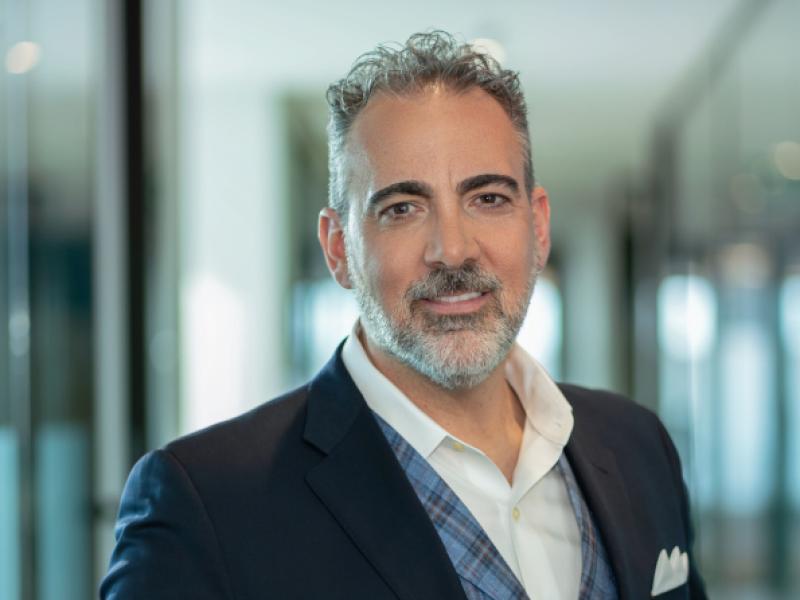
“In short, we save financial institutions money by automating most of their compliance and financial crime processes, as well as correcting payments that don’t make it to their final destination,” Nino Di Teodoro, chief executive officer of Pelican AI said during an interview with TechNX.
The firm recently renewed a long-term contract with German banking giant Commerzbank, which has been using its technology for years.
“We are not new, and we are not new to the AI game. The company is actually 33 years old, and we were using what we now refer to as AI even back in those days. But it was called machine learning and language processing, and even computer vision,” he said.
Commerzbank recently updated its Pelican AI sanctions screening platform to comply with new Single Euro Payments Area (SEPA) regulations.
Banks can incur significant costs when payments are flagged and delayed, requiring employees to spend time investigating the transactions.
Stopping financial crimes
For example, a payment involving a sanctioned individual or country, such as Iran, must be stopped if it violates applicable sanctions.
When a flagged payment is reviewed and determined to be legitimate, however, financial institutions want to reduce the time and expense involved in clearing it.
“Here’s how the AI comes into play. We have reviewed literally billions of payment transactions from all these banks, and we’ve got this model that has seen pretty much every form of shenanigans that fraudsters and money launderers and people trying to skirt sanctions have done.”
“The AI that we use can comb through volumes of work that obviously is beyond what a human being could ever do,” Di Teodoro said.
Financial institutions are looking to eliminate these costly "false positives" with software such as Pelican AI's.
“For example, at one of our banks here in Canada, we were able to reduce their false positive rate by over 75 per cent. So really cleaning up the operations so they could redeploy those human resources elsewhere.”
Pelican AI began business in 1993 and has since worked in 55 countries and processed more than two billion transactions, representing approximately $10 trillion in value, according to the company. It was recently listed on the CSE.
Ending costly false positives
It recently introduced a new tool, the Fraud Alerts Optimizer (FAO) to eliminate those costly false positives.
But Pelican AI’s new tool also has “what we call our self-learning module, and what it does is it observes the behaviour of a human operator as they correct a payment or release a payment that was held up for reasons of being suspicious for financial crime,” Di Teodoro explained.
“It observes what the human operator does, and then whenever a subsequent payment comes through that has a similar problem, it will replicate the behaviour of the human operator to correct that and send it through.”
For payment processors, a key performance metric is the straight-through processing rate, Di Teodoro said.
“So what happens is a bunch of payments come to a bank, and every day there is an exceptions list, and an army of human beings reviews each one of these payments to see why it didn’t go to its destination.”
Something as simple as a missing space in a customer's last name can cause a payment to be flagged. The self-learning technology is designed to recognize and correct such issues when they arise again.
“The payments industry is a very high-volume but low-margin game, so any time a payment needs to be touched by a human being to be corrected to get to its final destination, the financial institution is losing money on that transaction,” Di Teodoro said.
Improving the customer experience
Beyond the cost savings associated with faster payment processing, reducing delays can also help banks maintain positive customer relationships.
“When a payment is held up — either whether it be for fraud or anything else — you have bank clients who are inconvenienced, to put it mildly, when a payment doesn’t make it through,” he explained.
“Sometimes it compromises the relationship between buyers and sellers. Meanwhile, it was simply that the payment got hung up by the bank because of any one of these reasons. So when customer satisfaction is an important piece to a bank, which it is at most places, having payments go through without unnecessary delays is super key.”
Di Teodoro says Pelican AI is now entering its "2.0" phase, following its recent listing on the Canadian Securities Exchange after more than 20 years as a privately held company.
Describing Pelican AI as the "best-kept secret in banking," Di Teodoro hopes to raise the company's profile and demonstrate what its technology can accomplish.
“We are doing society’s positive work. We’re stopping criminals from getting access to the banking system. We’re stopping fraudsters. We’re making it so that the payment gets to the end.”


 Industry Events
 Locations