Locations







A newly-announced partnership between the American Fintech Council (AFC) and the Canadian Lenders Association (CLA) looks to improve cross-border collaboration and market access in North America for the rapidly growing fintech sector.
Gary Schwartz, president and CEO of the CLA, told TechNX.ca in an interview the partnership comes at a critical moment in the fintech industry.
With Canada planning to roll out an open banking framework – designed to let individuals and businesses securely share their financial data with accredited fintech companies and allow for more personalized financial services – and U.S. regulations governing AI-driven underwriting and alternative lending models, there is a growing need for fintech companies to find ways to navigate all this.
“We’ve started to understand that the health of the market is dictated in large part by understanding cross-border friction,” Schwartz said. “If you are starting a fintech company here (in Canada), you are ultimately thinking about expanding into the 10-times larger market in the United States.”
A fragmented regulatory landscape
One of the key goals of the partnership, according to Schwartz, is dealing with the fragmented regulatory landscape, both in Canada and the United States. The range of regulations governing how fintechs can operate, how they must handle consumer information, payments, risk management and even emerging technologies such as AI, can be daunting.
“Harmonizing across provinces is especially challenging,” Schwartz added. “British Columbia will come up with something which is diametrically in conflict with what’s happening in another province. So if you're a fintech in Ontario, for example, you are saying ‘Oh, we have our own set of rules here, now are we going to harmonize our rules with what British Columbia has in place?’”
He noted while provincial regulators and policymakers may have very good intentions with their rules and regulations, “nobody understands the unintended consequences” to the fintech market and companies.
The United States is even more fragmented, Schwartz added, with 50 states operating independently.
Schwartz said one of the goals of this collaboration between the AFC and CLA is to create a framework where both can look at how each country is dealing with these conflicts and see what can be learned and applied by fintechs. He described it as a shared “periscope” where each will look for how governments and companies dealt with similar issues to determine what works, and not “reinvent the wheel.”
Emerging priorities
While the collaboration is new, Schwartz said both have identified two immediate priorities for fintechs: fraud, in particular identity fraud; and the growing role of stablecoins in lending and payments.
“Right now, fraud is a big issue,” Schwartz said. “You are giving a loan to someone that does not exist, or a car loan to someone who does not exist and that car is then shipped elsewhere."
Stablecoins are presenting another set of issues.
Stablecoins are a cryptocurrency intended to maintain a stable value by being pegged to assets like the U.S. dollar, and to give holders a digital and lower-volatility alternative for payments and trading in decentralized financing systems. The problem is stablecoins are also susceptible to fraud.
While the European Union, Singapore and Hong Kong have adopted a regulatory framework for stablecoins, federal and provincial/territorial deposit insurance plans in Canada do not cover crypto assets, including stablecoins, according to the government of Canada.
Schwartz said the collaboration at this early stage will focus on developing joint policy papers, joint research and roundtables to develop frameworks for advancing cross-border regulatory alignments and responsible lending practices. The long-term goal, however, is to assist in growing the fintech market in both countries.
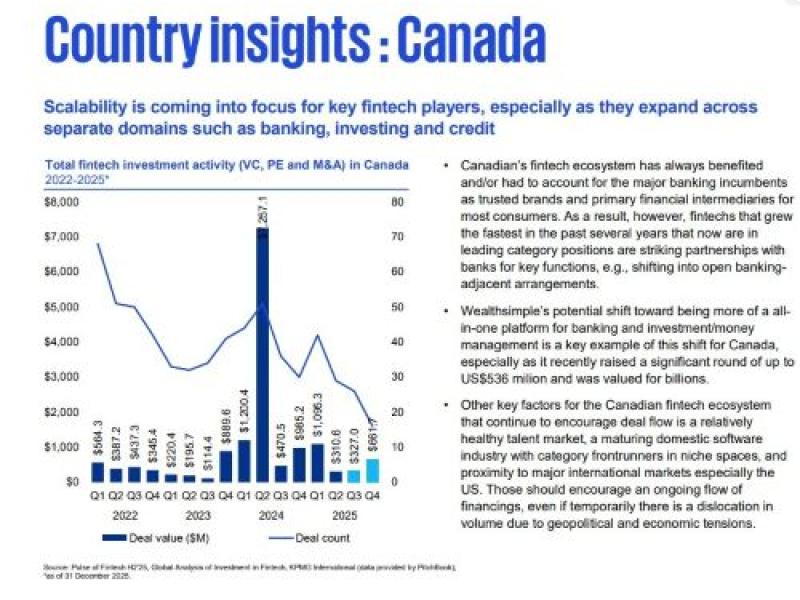
According to Schwartz, the fintech market last year was US$2.4 billion for Canada and US$56.6 billion for the U.S.
“It is really about breaking down this border so that there is cross-pollination on capital, intellectual ideas and access to markets,” he said.



 Industry Events
 Locations