Locations




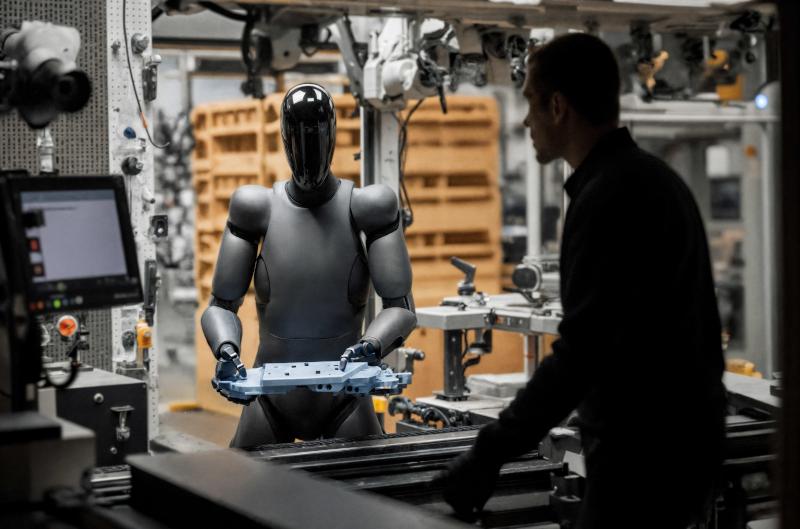
For those firms wishing to deploy robots alongside humans in an industrial setting, safety is clearly a critical concern.
One Canadian company promises that its operating systems for robotic applications are secure enough to be trusted.
QNX Software — a division of Waterloo, Ont.-based BlackBerry (BB-T) — was recently named the overall leader in a competitive ranking of commercial real-time operating systems for robotics in functional safety, earning the number one spot with an overall score of 87.1 from a study done by ABI Research.
For Winston Leung, this wasn’t a surprise. “We have been around for 45 years, so safety is our pedigree. We have a lot of proof points that we historically have shown,” Leung, senior strategic alliances manager at QNX in Ottawa, told TechNX.
“When you’re talking about robotics customers and who are building these robotic systems, the fortunate thing is that we have a long history, working in medical devices and industrial automation and defence sectors and those kinds of things, where we have proven our successes.”
Its most recent iteration is its Software Development Platform 8.0 which “is the latest and greatest OS (operating system) that we brought to market that’s safety and security certified and meant for high-performance computing,” he said.
Software for robotics
The company was founded in 1980 by Dan Dodge and Gordon Bell (both graduates of the University of Waterloo), and today makes software for products such as surgical robotic systems, industrial automation, and in can be found in “numerous automotive type applications, advanced driver assistance systems (ADAS), cockpit, gateways,” Leung said.
“We do dominate a lot in surgical robotic systems. Right now, we have about eight out of 10 top surgical robotic companies using QNX.”
QNX software is helping drivers navigate safely, as its foundational software powers collision avoidance, and other safety systems can be found in more than 275 million vehicles.
Its client list is a who’s who of high-tech darlings: Nvidia, Qualcomm, Intel, AMD, Texas Instruments, as well as more than 45 automakers, including BMW, Daimler, Dongfeng Motor, Fiat Chrysler, Ford, GM, Honda, Hyundai, Jaguar Land Rover, Mercedes-Benz, Toyota and Volkswagen.
In its most recent quarter, the company brought in $78.7 million in revenue for its parent, BlackBerry, which was 20 per cent higher, year-over-year.
To demonstrate its prowess, the company will be presenting at the upcoming Robotics Summit & Expo, which is being held May 27 and 28 in Boston.
Live collision avoidance demonstration

As robots move from behind separated areas, the need for security and safety becomes even more acute.
“As robotics, especially mobile robotics, is moving into more dynamic and structured unstructured environments, they’re no longer caged off or barriered off from human beings, and they’re operating in the same environment we are," he said.
"For example, delivery robots, service robots; we’re trying to see functionality become more important in that space and a lot of the companies that are looking for that solution are coming to QNX.”
During the summit, QNX will have a live demonstration of its collision avoidance systems, he explained.
“We made an adaptive work cell where you can put a box right beside a lidar (light detection and ranging) and the robot arm, and that robot arm will not pass that box because it is now deemed unsafe to do so. We made a dynamic work cell, where you can push the box forward and backwards to create a work cell for the humans to safely operate.”
But in addition to safety, security is also crucial in ensuring safety continues to function as it should.
“One aspect around robotics is that without security, there’s no safety; so if there’s a malicious actor, you can’t have a safe device. We are fault tolerant, (we provide) fault isolation, which means you’re able to isolate all the different components. If one component fails or falters, or there’s some sort of malicious intent happening with that application or process, we can shut down and reboot it without shutting the entire system,” Leung said.
“It’s what I call the kryptonite to the blue screen of death.”
Dealing with AI
And while AI seems to be embedded in almost anything that is considered high tech, QNX has to navigate this new landscape when working with its partners.
“Everyone has their own methods as to how they want to deploy it. So being able to accommodate and make sure that we are the Switzerland of the world, to make sure that we work with every single one of them. I think that is the biggest challenge being a cross-platform OS," he said.
"It’s both a blessing and a curse, in the sense that it’s a lot of work but we’re seeing a lot of opportunities at the same time.”
To enable this to work, QNX ensures it is compliant with all of the latest worldwide standards, according to Leung.
“On top of that, the architecture of our OS is inherently safe as well. We built a culture of safety and security to make sure that everything that we do is built with that in mind. So, anything from the development cycles, the processes, the porting, to even the certifications that are needed for robotics.”
“We made sure that our OS is safety certified to those standards, and as a result, it makes it easier to have those conversations with the customers,” he said.
EDITOR'S NOTE: The text has been edited to correct two references: one about QNX's software that powers collision avoidance and another clarifying QNX's role with surgical robots. We sincerely apologize for the error.


 Industry Events
 Locations