Locations





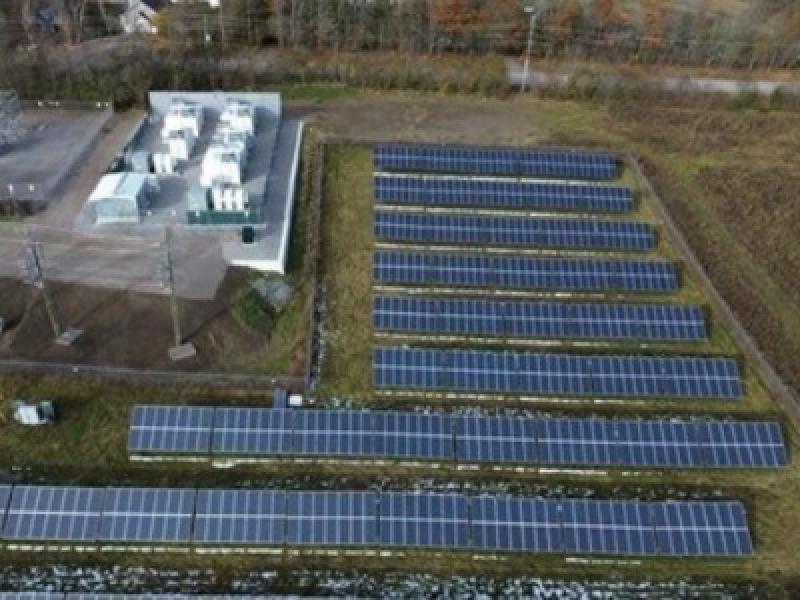
PowerBank Corporation (PBK-Q), a Toronto-based solar and energy storage developer, is focusing its efforts on artificial intelligence (AI) infrastructure and modular data centres as demand for computing infrastructure continues to rise.
PowerBank plans to invite data centre operators to place their projects near its energy developments so they can be hooked up to reliable sources of renewable energy, PowerBank’s CEO Richard Lu said in an interview with TechNX.
With the ever-surging need for electricity to keep up with the ballooning demand for data centres, the decision to focus on data centres and AI is intented to support the company's goal of making PowerBank a "major player for powering data centres with speed,” he said.
The data centres are expected to range in capacity from five megawatts (MW) all the way up to 20 MW. The U.S. is anticipated to be PowerBank’s main market under the strategy, but it also expects to service Canadian projects in the Greater Toronto Area, Calgary and Vancouver.
Speedy solar for AI, data centres
The strategy, announced in early June, is a continuation of the company’s rebranding from SolarBank, Lu said. Last year, PowerBank announced its diversification into data centres, energy storage and cryptocurrency, moving away from a concentration on distributed and community solar projects.
Under the AI and data centre-focused strategy, PowerBank plans to provide its renewable energy to modular data centres, powered shells and edge data centres, Lu said, adding a layer of energy reliability on top of a grid connection.
Data centre operators are looking for speed, he continued, and do not want to wait years for power generation projects and transmission lines to be built. PowerBank, on the other hand, can develop its projects much faster by comparison and is experienced with development, permitting and ownership, Lu continued.
“We got the power, right? We can deliver it in 12 to 18 months to get the supply to get us to plug-and-play. We got the land. We got the local permits.”
The company is in negotiations for approximately 12 sites with data centre owners and operators, Lu added.
To execute on the AI and data centre strategy, PowerBank has signed a letter of intent with Denver-based Nodiac Corp. to partner on the plan. The two companies are to explore potential collaboration on evaluating the deployment of modular data centre infrastructure at PowerBank energy sites across North America.
Described by Lu as a “long-time friend” on PowerBank's renewable energy side, Nodiac will work with technology providers and carriers to identify the needs of data centre tenants while PowerBank will be dedicated to the energy development side.
PowerBank adds data centres to core business
To date, PowerBank has built over 100 MW of solar generation capacity in Canada and the U.S., and has 20 megawatt-hours (mW-h) of energy storage in operation through a project in Ontario.
Its upcoming projects include the 4.9 MW solar and 20 mW-h energy storage development in the Municipality of Shuniah in Ontario. The company started commercial operations of its 4.99 MW energy storage project in Cramahe, Ont. this week.
PowerBank has approximately one gigawatt of solar generation capacity and one gigawatt-hour (g-Wh) of energy storage capacity in development, Lu said.
The shift to from SolarBank to PowerBank was motivated by policy headwinds for renewable energy, Lu said. Its investors told him “you are actually not just a solar company,” he continued.
Further underscoring its commitment, PowerBank changed its ticker on the Nasdaq and Cboe Canada Exchange from SUUN to PBK.
Despite the overhaul to its name, stock symbol and business, PowerBank’s “fundamental competence” and foundation remains being a renewable power producer, Lu said. The company will not be leaving behind its traditional customers such as grid operators, communities and industrial companies, rather adding data centre operators as another pillar to the business.
“Most of the demand is going to be from them, so it looks like the focus. But it doesn’t mean that we are abandoning our traditional customers.”



 Industry Events
 Locations