
 Locations






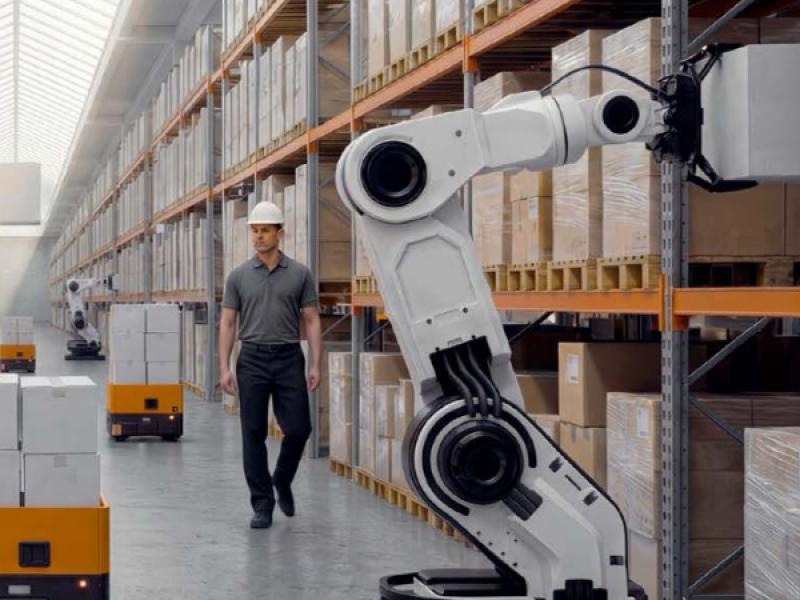
Software is expected to have an increased role in robotics during the next three to five years, 85 per cent of engineers and software developers surveyed by QNX said, indicative of its growing presence in the field.
For its Inside the Robot: Architecture Benchmark Report, Ottawa-based software company QNX polled 1,000 professionals working on commercial robotics in Canada, China, France, Germany, Japan, the U.K. and the U.S. to understand their thoughts on the sector.
Artificial intelligence (AI) in particular stood out for its reshaping of robotics. Almost nine-in-10 believe physical AI-based robotics will be critical to their robotics strategy over the next three to five years. Most companies anticipate software budgets will be shifted to AI and machine learning.
With more hardware systems being consolidated onto one platform, it means “software is becoming more critical” to isolate faults, Winston Leung, senior strategic alliances manager at QNX, said in an interview with TechNX. He was consulted for the research of the report.
Robotics, QNX driving BlackBerry’s revenue
QNX is a division of Waterloo, Ont.-based BlackBerry Limited (BB-T). Founded in 1980, QNX is a developer of software for cars, robotics systems and industrial automation. Its clients include Nvidia, Qualcomm, Intel, AMD, Texas Instruments and many of the world’s largest automakers.
QNX was a major force behind BlackBerry’s financial performance in Q4 2025. BlackBerry’s revenue was $156 million (all figures US) in the quarter; QNX posted record quarterly revenue of $78.7 million, up 20 per cent year-over-year.
For financial year 2025, QNX accounted for approximately half of BlackBerry’s revenue of $549.1 million. The division’s revenue rose 14 per cent year-over-year to $268 million, increasing from 10 per cent growth in the prior year.
QNX has “growing momentum in robotics, physical AI, and other adjacent markets,” BlackBerry’s CEO John J. Giamatteo said in the Q4 financial results.
In March, QNX announced its Software Development Platform 8.0 supported AMD Ryzen Embedded x86 processors. The processors were described as “a foundation that's particularly attractive” for systems such as robotics controllers, automotive digital cockpits and machine controllers.
AI, machine learning expected to be software budget priority
QNX asked respondents where they have historically spent more of their engineering time and resources. Software development was the most common response at 39 per cent. One-in-five said hardware development. Almost one-in-three said they spent about the same amount of time for both; 11 per cent said it varied depending on application.
Canadian respondents were the least likely out of seven countries to say they devoted more of their time and resources to software development at 29 per cent, and were the likeliest to say it varies depending on application at 20 per cent.
For the 85 per cent of respondents who expect software to play a bigger role in robotics during the next three to five years, QNX asked where they anticipate robotics software budgets to shift in the period.
Over half (51 per cent) responded AI or machine learning decision-making and cybersecurity. Under four-in-10 (38 per cent) said operating systems and real-time control. Following closely behind was safety-certified software at 37 per cent.
Robots powered by AI to perceive, reason and act autonomously in real environments — known as physical AI-based robotics — are seen as very critical to 37 per cent of respondents’ robotics strategy during the next three to five years. Over half said it is “somewhat” critical.
“Physical AI is definitely an up-and-coming trend,” Leung said, pointing to mobile robots, including autonomous vehicles, that are based on the technology.
In terms of highest priority areas for robotics development in the next three to five years, AI capability growth, safety certification and regulatory compliance, and operational efficiency were named the top choices by 48 per cent, 36 per cent and 32 per cent of respondents, respectively.
87% are optimistic regulations can keep up with innovation

In another sign of the importance of software in robotics, the top cited factor that most limits the real-world performance of robotics systems today was said to be software architecture and integration at 27 per cent. The next factors were regulatory or deployment constraints at 21 per cent and data availability or quality at 20 per cent.
Regulations were the most cited limiting factor on the real-world performance of robotics systems in Canada.
The most challenging regulatory or industry standard to comply with was cybersecurity regulatory requirements at 51 per cent, followed closely behind by functional safety standards for robotics and autonomous systems at 49 per cent. AI and machine learning regulations relevant to robotics were third at 44 per cent.
Though viewed as an obstacle by some, there was optimism that regulations can keep up with the pace of innovation in robotics.
Approximately one-in-three said regulatory frameworks can “definitely” evolve fast enough to keep up with innovation and growing complexity in robotics systems. Over half (55 per cent) believe it possibly can; 11 per cent said “probably not."
Over eight-in-10 respondents were “strongly” or “somewhat” optimistic about the pace of progress in the robotics industry.
The top three concerns for robotics development were security threats or vulnerabilities (45 per cent), regulatory or compliance burden (39 per cent) and skills shortages (39 per cent). Consumer trust or acceptance (32 per cent) and the slowing pace of innovation (30 per cent) rounded out the worries.
“You need software engineers within these big robot manufacturers to be able to program these robots to do different things that they’ve historically had not been able to do,” Leung said.





 Industry Events
 Locations