Locations





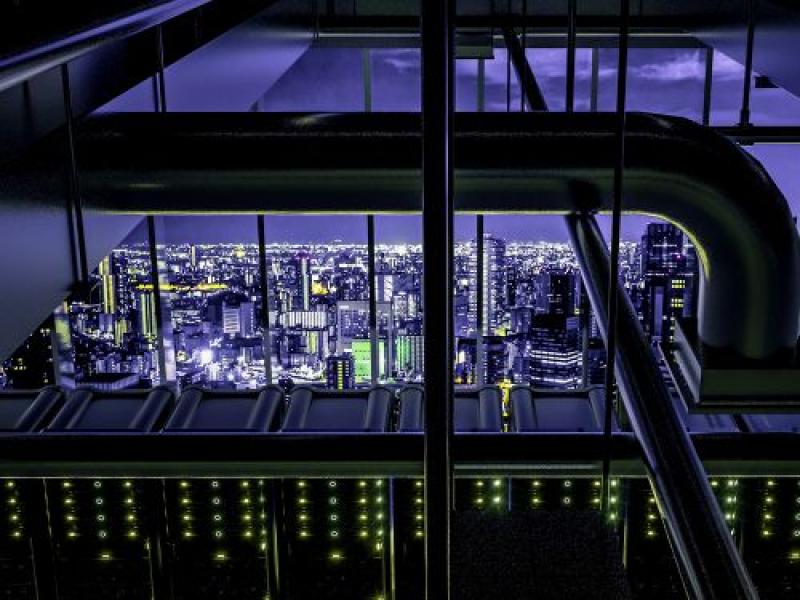
As AI and the data centres behind it revolutionize Canada's economy, both are straining the electricity grids needed to power the resulting explosion of computing capacity.
“The growth we are seeing right now is unlike anything the power system has dealt with before,” said James See, national sales director, systems business at Schneider Electric Canada in an email interview with TechNX. “Traditional commercial or industrial growth tends to be gradual and somewhat predictable. AI-driven data centres are different. They require very large amounts of power, they need it quickly, and they need it reliably around the clock.”
RBC’s 2024 report, Power Struggle: How AI is challenging Canada electricity grid, found a single ChatGPT query consumes 10 times more energy than a standard Google search. More advanced AI queries, such as generating a text or creating images, demand even more power from electrical grids.
“If all the data centre projects currently being reviewed by regulators proceed, they would account for 14 per cent of Canada’s total power needs by 2030, similar to 12-15 per cent by 2030 in the U.S.” the study reported.
See added electrical grids are struggling to keep up with this demand and electricity production and transmission is now being seen as a “strategic variable in Canada’s AI ambitions.”
“Access to power, speed of grid connection and long-term price stability will influence where projects are built and how competitive Canada can be,” he continued. “If we plan properly, this can accelerate infrastructure modernization. If we do not, it can create bottlenecks that slow both digital growth and industrial expansion.”
Smart energy management

Provincial governments have started to address this challenge. In June 2025, the Quebec National Assembly enacted Bill 69 to ensure the responsible governance of energy in the province; and the Ontario government introduced Bill 40, Protect Ontario by Securing Affordable Energy for Generations Act. Provinces are looking to increase power generation as well from renewable sources, hydro, natural gas and nuclear.
While new power generation is to be welcomed, large-scale generation projects take years to develop and connect, See said.
“Demand from AI facilities is moving much faster,” he continued. “That is why the solution cannot rely on generation alone.”
What's needed is smarter energy management to keep the grid from failing, See said.
“Smart energy management is the use of real-time data, connected systems, and intelligent controls to monitor, optimize, and automatically adjust how energy is consumed and distributed within a facility,” he explained. “In a data centre environment, that means visibility into everything from server level loads to cooling systems to backup power infrastructure. In practice, it means a unified control layer across power, building systems, IT infrastructure and on-site energy resources, with AI/analytics closing the loop from insight to action.”
An example of the concept in practice
One example of smart energy management See offered is integrating advanced monitoring of data centre power usage with intelligent power and cooling systems, and adding energy storage systems to supply needed power during peaks of heavy AI and data centre usage without straining the energy grid.
“When operators have granular visibility into rack-level consumption and thermal conditions, they can right-size cooling instead of overprovisioning it,” he said. “Cooling is one of the largest energy draws in a data centre, so deploying efficient direct-to-chip liquid cooling at scale with digital twins and orchestrating heat exchangers and chiller plant controls can significantly reduce energy and water demand.”
“If we do not embed intelligence into how these facilities consume power, we risk creating friction between digital growth and energy security. Projects could face delays due to grid constraints,” he said. “Canada has an opportunity to position itself as a leader in sustainable digital infrastructure. That requires treating energy not as a background utility, but as a core design consideration.
"Smart energy management is what connects reliability, efficiency and sustainability in a practical way.”


 Industry Events
 Locations