Locations
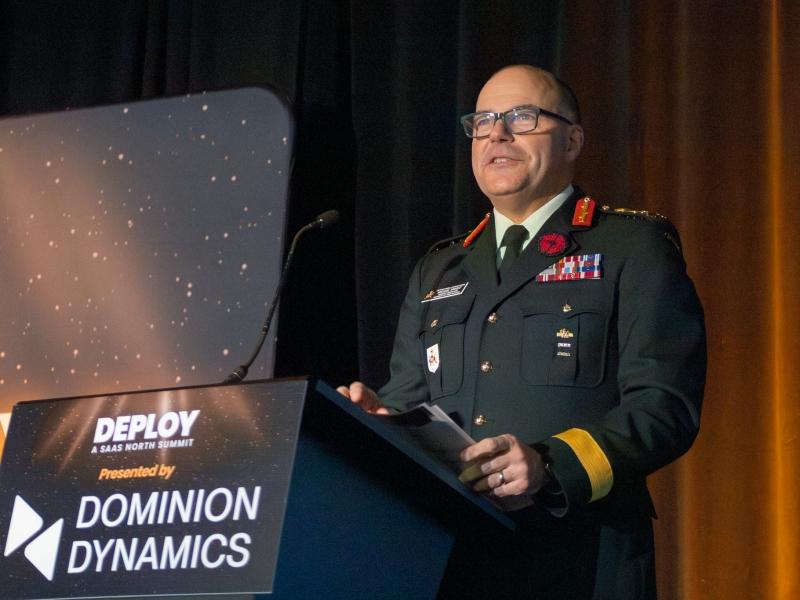


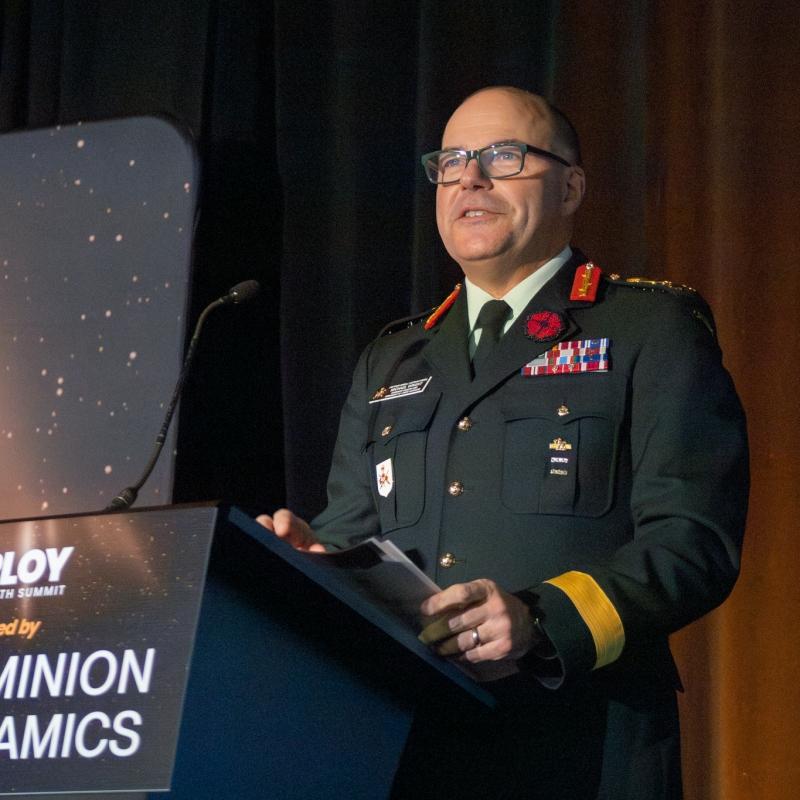
The Canadian Army plans to establish two robotics combat squadrons as part of a broader effort to integrate artificial intelligence (AI) and autonomous technology into military operations, the Commander of the Canadian Army said at the SAAS NORTH AI conference earlier this month.
"To build the Army Canada needs, we need to work with Canadian companies ready to tackle difficult problems, investors who can help good ideas scale, and a defence team that is better at connecting Canadian talent to the challenges that our soldiers face," Lieutenant-General Michael Wright said during the Deploy summit, a section of the SAAS NORTH conference dedicated to defence.
Wright said the Army is rethinking its approach to training, giving soldiers new equipment and allowing them to determine how best to use it and adapt their training accordingly.
Canadian Armed Forces get new technology
Wright said the Forces are also looking to support technological innovation early in the development stage.
“We are seeking to give industry access to bases, training areas, and operational environments so systems can be tested realistically,” Wright said during his keynote speech.
The approach would allow defence technology companies to test their products in realistic operational environments and receive direct feedback from soldiers.
And that technology is going to be going into the hands of soldiers in new technology-based squadrons, according to Wright.
“Next summer we are making two of our armoured (reconnaissance) squadrons, one at the Royal Canadian Dragoons in Petawawa, and another at the 12e Régiment blindé du Canada in Valcartier, into robotics combat squadrons, giving them uncrewed air systems and uncrewed ground systems, and not saying ‘here's how you train in them and here's the doctrine,’ but actually having them say this is the training that we did, and this is the doctrine that we think we need to adapt,’” the general said.
During a panel discussion called The future of the Canadian Army and Warfare: Autonomous Systems and AI, Maj.-Gen. Stéphane Masson, the Chief of Staff for Army Strategy said that the reimagined training process will be new for the Army. “This learning cycle will not be prescriptive; it will be the opposite for the first time,” Masson said.
“We are very confident that the 25 years old soldier, they know best on how to operate (new technology), and not me from Ottawa,” he said.
Concerns over lethal autonomous weapons
During the autonomous systems panel, audience members asked questions about the use of lethal systems that can make decisions themselves. Lethal autonomous weapon systems are designed to identify and engage targets without human intervention in the selection and attack process.
“We're not ready for that,” Masson said. “But we have initiated the discussion. The biggest hurdle we need to go through at this point is the legal framework,” he said.
“When we talk about AI, it needs to be done in accordance with the Geneva Conventions. There are some hard rules.”
Masson's comments come as international delegates meet in Geneva from Nov. 16 to 20 to discuss the implications of autonomous weapons under international humanitarian law. The United Nations Secretary-General has called for an agreement establishing restrictions on autonomous weapons systems.
Supporting industry
Masson said that if there is any reason Canada fails to innovate in its military, it will be because of a lack of speed and agility.
During a panel called Is Defence Your Market?, executives from dual-use technology companies spoke about how they approached the defence sector with their products not originally intended for defence.
Megan Leslie is the CEO and Co-Founder of NanoTess, a medical technology company that created a gel used to treat wounds and burns.
“We've been working with community paramedics around Alberta for the last couple of years, servicing and treating people living in encampments,” Leslie said during the panel. “And when the Ukraine military came to Canada for a conference, these community paramedics, actually told them about our product,” she said.
The company realized its product could have applications in the defence sector because it does not require a sterile environment to work, making it suitable for use in both encampments and battlefield conditions.
“Word of mouth through the customers that you have is what worked for us,” Leslie said.
During the future of the Army panel, Maj.-Gen. Masson said that companies with ideas who don’t know how to approach the market should reach out to the Army.
“Talk to us. Find a way to get in contact with the Army,” he said. “We’re going to enable you with our market.”
Riley Hennessey, chief of staff at Defence Research and Development Canada, said organizations such as his, the Business Development Bank of Canada and programs such as Innovative Solutions Canada can help startups and companies entering the defence sector connect with potential partners and customers.
Finding funding for defence startups
On the panel Defence Funding: What investors are actually looking for, Devon Galloway, a general partner at Garage Capital, said that most major investors are looking to invest in Series A companies with clear pathways to success. Getting started needs funding from other sources before a founder can convince the investor to take a risk on them. “I truly think a lot of this stuff in the earliest stages often is angel money, friends and family money,” Galloway said.
But he said that the size of the market and potential upside determines the risk appetite of investors.
Beyond venture capital, Canada's major banks are also positioning themselves to support the growing defence sector.
While Canadian banks have traditionally played a limited role in defence financing, all five of the country's major banks have committed billions of dollars to support the sector in 2026. On the panel was Niramay, an executive director of CIBC Innovation Banking. “Would have thought that you’d have a bank on the panel of defence,” he joked.
“We are fully aligned with defence investment strategy, and fully behind Prime Minister (Mark) Carney's objectives,” Niramay said.
Niramay said that CIBC is one of the banks that has joined the Defence, Security and Resilience Bank. And he said it is never too early for a startup to come to CIBC and ask for investment, even if they weren’t the right fit for venture capital investors. “Don't wait until you have massive contract already. That's not when our capital is valuable to you.”




 Industry Events
 Locations