Locations
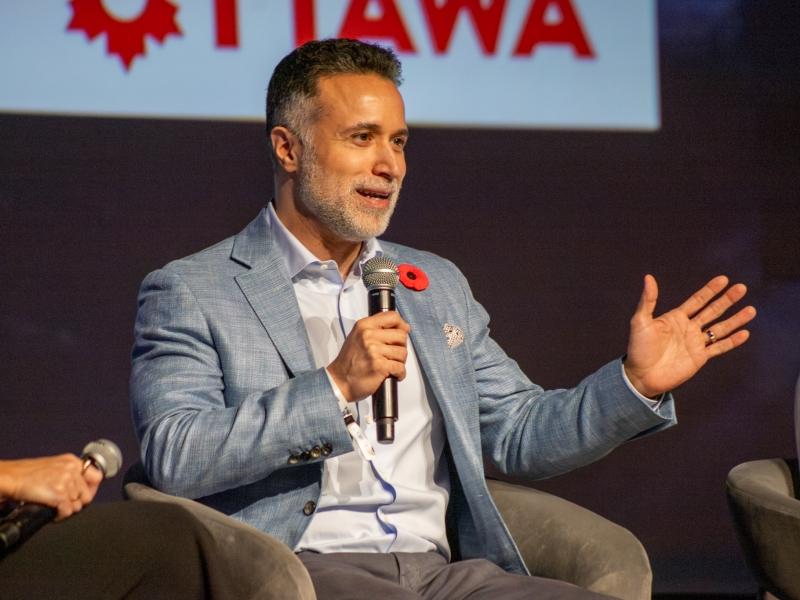


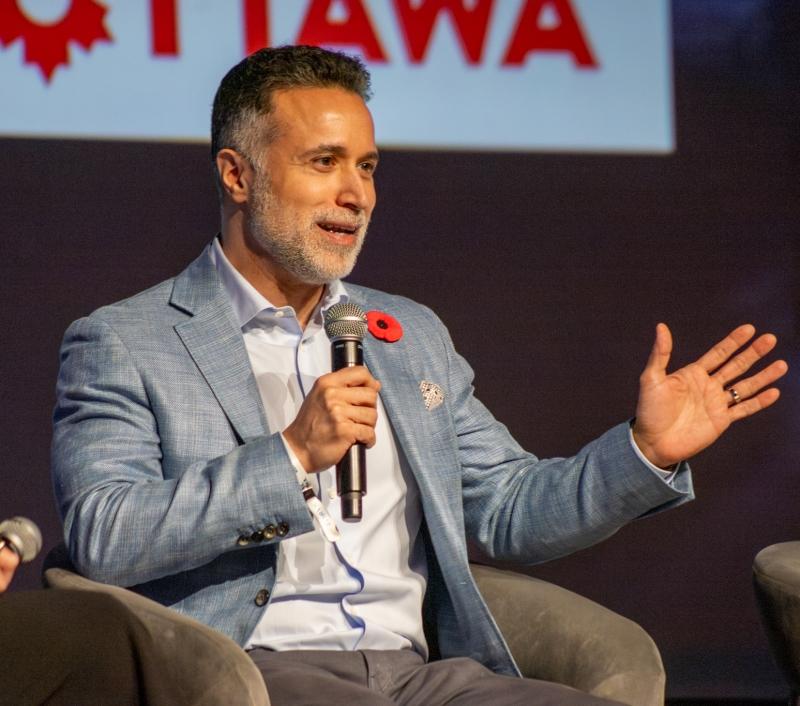
Relationships are often key to securing investment and scaling software businesses. Speakers at the SAAS NORTH AI conference, held in Ottawa on Nov. 4, emphasized that a strong founding team and a network of supporters are more important than the business idea itself.
During the Canada's capital path – The how and why I got the money panel, Claudio Rojas, CEO of the National Angel Capital Organization, said angel investors are among the best sources of early-stage funding.
The relationships entrepreneurs develop with angel investors can provide valuable business development advice, while investors' patience in waiting for a return gives startups more time to grow, he said.
Angel funding is generally suited to startups at the seed or pre-seed stage, while venture capital is intended for companies ready to scale and facing expectations of rapid growth, Rojas said. He described angel funding as a service road alongside the “superhighway” of venture capital.
“(VCs) need rapid returns, so you better be ready for that momentum when you get onto that highway,” he said. “Some great companies stall on the highway, and they get crushed, and they otherwise would have been great businesses had they waited just a little bit longer before entering into the venture capital side.”
Who are investors funding?
Investors and founders on the panel agreed that the strength of a company's team is a major factor in securing investor confidence.
“I think anyone can have an idea. What's special is the founder,” Alex Labreche, the CEO and co-founder of AI finance software company Pluvo, said.
Labreche recalled that after he pivoted the business model at a previous company, an investor told him they had anticipated the change because "your idea was kind of stupid." The investor backed the company anyway because they believed in its founders.
Margaret Wu, a lead investor at Georgian, said that as a Series B investor, she looks for teams capable of sustaining their momentum.
“We are looking for a founding team that is showing that they're going to be able to keep fundraising. Because if they're raising growth fund capital now, we're pouring fuel on the fire,” Wu said. “We want to see the traction that they have right now is sustainable.”
Wu said she makes only a couple of "bets" each year, with initial investments ranging from $20 million to $50 million. She said venture capitalists like her are only going to invest in businesses on the verge of explosive success.
“You need those angels to prepare you with that patient capital to get you ready for that venture capital superhighway,” Rojas added.
The panelists acknowledged the challenges of securing large venture capital investments, particularly in Canada. Labreche said building a network and seeking advice from fellow entrepreneurs is easier in San Francisco than in Toronto.
The challenges facing Canadian startups are reflected in the country's venture capital market. A May 2026 report from the Business Development Bank of Canada (BDC) found that venture capital investment fell six per cent in 2025, while the number of deals declined 12 per cent. Almost half of Canada's venture capital funding went to the 10 largest deals, highlighting the concentration of investment among a relatively small number of companies.
Don’t let due diligence kill the deal
Even after investors express interest, startups must pass a rigorous due diligence process before a deal can close.
During a breakout panel titled Diligence isn't sexy: neither is losing the deal, business and legal experts emphasized how gaps in intellectual property ownership can undermine an investment.
Shane McLean, managing partner at law firm LaBarge Weinstein, said startups should ensure employees sign agreements assigning ownership of their intellectual property to the company. These agreements should be among the first things a startup puts in place, he said. Not having IP clearly granted to the company will scare off investors.
“The issue of ownership is probably the most crucial thing to think about in the context of a due diligence exercise, because the buyer or investor is typically invested in the value that's based on that IP,” McLean said.
“I think it’s a lot easier to do that as quickly as possible than it is to do it later,” Mike Potter, co-founder of data recovery company Rewind, said.
These agreements also help establish ownership stakes and clarify how equity will be divided as investors come on board. Potter warned that disputes over ownership can threaten a company if they aren't resolved until after it becomes valuable.
Putting off tax compliance can come back to haunt startups
Potter said his company didn't prioritize other due diligence issues, such as U.S. tax compliance, during its first few years.
“We punted (that) problem down the road because there was always stuff that I found more valuable to work on than doing taxes in the States,” he said.
However, during a subsequent due diligence process, investors flagged Rewind's sales tax compliance. Money from an investment was placed in escrow until the outstanding tax obligations could be resolved.
EY partner Jeff Johnson said startups can defer some foreign sales tax compliance obligations, but they need to understand their potential liabilities before expanding into other markets.
“At some point in time, someone is going to ask you the question ‘what are you doing around U.S. tax compliance?’” he said. “At least know what your exposure is if you're going into a different geography.”
“Getting advice on something that could massively impact your finances or your operation, it's worth paying a couple of bucks to get the right advice.”





 Industry Events
 Locations