Locations






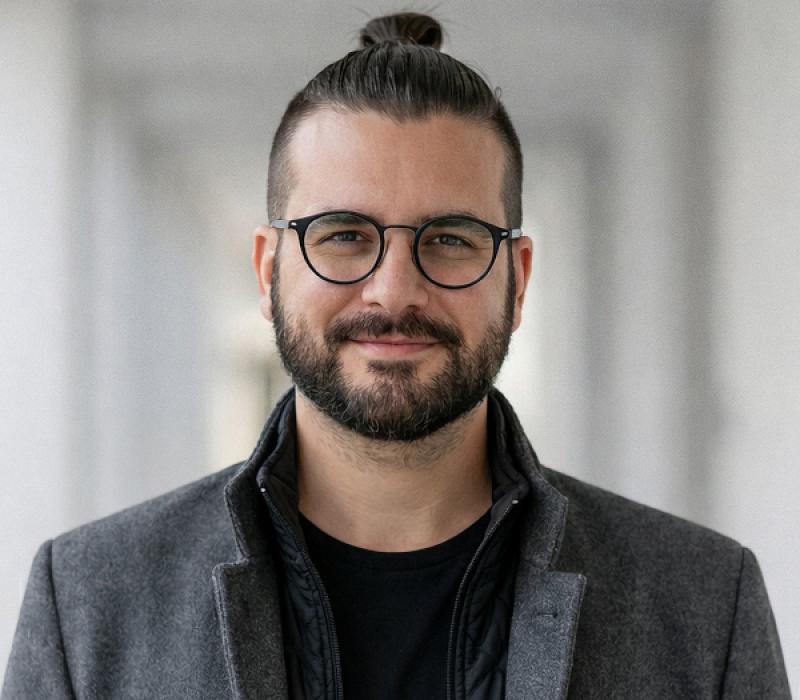
Smart glasses seem to be having a renaissance, and many manufacturers are releasing new products, one Ottawa developer hopes to address potential privacy concerns with a new app.
NearLens, available for iOS only, allows users to know when someone nearby is wearing smart glasses.
“I realized that it was an opportunity to address privacy because the smart glasses today have no boundaries or guidelines for users that are recording,” Marcos Rezende, product designer and builder of the new app, told TechNX in an interview.
“The technology is evolving so quickly that the laws could not evolve at the same time.”
School project becomes real-world app
Rezende — who works full-time as a senior product designer for Hive.co, a marketing platform for event promoters — began thinking about the proliferation of recording devices during his time at IADE, Faculty of Design, Technology and Communication, an institution in Lisbon, Portugal.
He attended IADE post-graduation, where he studied AI and design between September 2025 and June 2026. Emanuel Cardoso and Mariana Fernandes also helped with discovery research for the app.
“I started that project in the middle of the class, in the middle of the journey, but I realized that it was a huge opportunity,” he said.
Rezende also spent time in Ottawa interviewing glasses owners and others, in order to better understand how the product is being deployed in the real world.
It works by detecting low-level Bluetooth signals that are emitted by the glasses. The app is able to discover Bluetooth requests. "We have codes for every single manufacturer for glasses and it generates a code,” Rezende said.
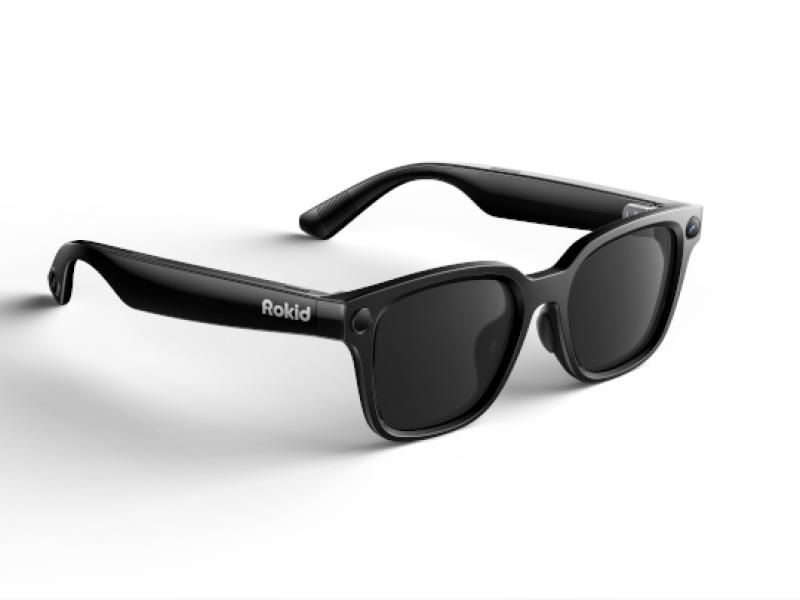
It displays an alert for the user when one of the codes is detected nearby. It can detect Ray-Ban Meta, Oakley Meta, Snap Spectacles and EssilorLuxottica smart eyewear.
User privacy respected
Rezende also wanted to ensure that the user of the free app can also expect to have their privacy protected when using it.
“The app is guaranteed that . . . no data is saved, and it’s a free app, with no account; no cloud, no data, for free privacy.”
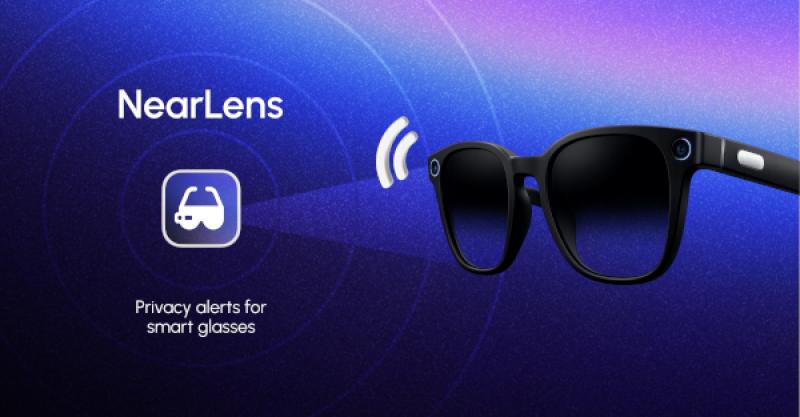
While it doesn’t detect whether or not someone is actually using the recoding function, the app alerts the user when a pair of smart glasses are nearby, allowing them to decide their own course of action, explained Rezende.
“One action that you can do is move around or move to a different place to protect your privacy; your mobile, your data, and that kind of thing.”
So far, the app has been downloaded more than 300 times, Rezende said.
Currently, NearLens is only available via the Apple Store “I’m just focused on iOS, but maybe in the future (to release to Android users) but so far, no plans yet,” he said.
He is not looking to make money with the App, he explained, but would rather the privacy issue be resolved.
“A tool that closes that gap should spread. If Apple or Google built this into the operating system tomorrow and NearLens became pointless, that is the outcome I want,” he said via an email exchange.
Resurgence with AI tech included
While the first commercially available smart glasses were released years ago in 2013 with Google Glass, they didn’t include AI and were not very widely adopted. Today, the popularity of smart glasses has rebounded, he said.
Today’s models are much more highly powered, he continued, “because even the evolution of AI is quickly changing and today, for example, we have smart glasses that recognize people in three seconds, but I have no idea who the person behind the lens is.”
For Rezende, this app fits into his overall mantra of being helpful. “One thing as a product designer that resonated a lot in my career was solving real problems. Before NearLens, I created an app called RX Reader, with the same purpose: solving real problems that humans cannot solve right now.”
RX Reader helps users read “medical transcriptions using AI,” he said.
But for NearLens, the idea is to give choice back to the user, especially in the case of women who may be worried about being harassed in public by being filmed without consent.
“You feel uncomfortable with people around you recording you, especially in (public) places . . . like in hospitals or gyms, or imagine a coffee shop that you’re accessing your banking account,” Rezende said.
By deploying this technology, users now retain, “the right to say no.”


 Industry Events
 Locations